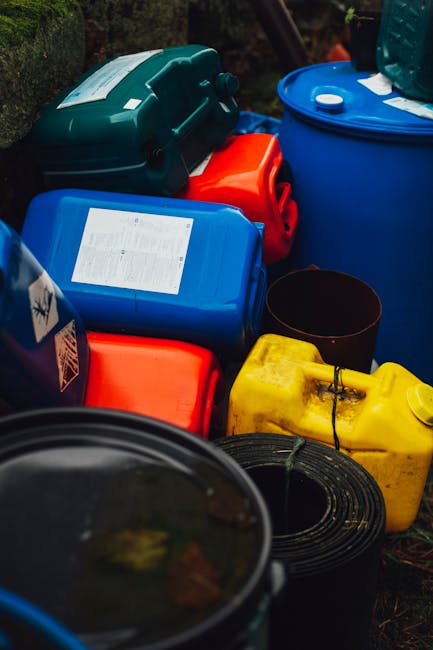
Hazardous waste obligations for Knightsbridge businesses & landlords
If you run a business or manage property in Knightsbridge, hazardous waste probably shows up in more places than you'd expect: a forgotten tin of solvent in a storage cupboard, fluorescent tubes after a refit, an old fridge in a flat, a leaking cleaning product under the sink, or leftover builders' materials after maintenance. The tricky bit is that hazardous waste obligations for Knightsbridge businesses & landlords are not just about getting rid of "nasty stuff" safely. They are about knowing what you have, separating it properly, using the right paperwork, and making sure it reaches an authorised route. Get it right, and life stays orderly. Get it wrong, and the mess can become legal, financial, and frankly stressful.
This guide breaks the topic down in plain English. You'll find what counts as hazardous waste, how responsibilities differ for businesses and landlords, the practical steps to take, common mistakes, and the best way to stay on the safe side without overcomplicating things. And yes, we'll keep it grounded in real-world Knightsbridge situations rather than theoretical jargon.
Table of Contents
- Why hazardous waste obligations matter
- How the process works in practice
- Key benefits and practical advantages
- Who this is for and when it makes sense
- Step-by-step guidance
- Expert tips for smoother compliance
- Common mistakes to avoid
- Tools, resources and recommendations
- Law, compliance, standards and best practice
- Options, methods and comparison
- Case study or real-world example
- Practical checklist
- Conclusion
- Frequently asked questions
Why hazardous waste obligations for Knightsbridge businesses & landlords matters
Hazardous waste is one of those areas people only think about when something has already gone wrong. A paint drum splits in a basement store room. A contractor leaves chemical adhesive behind after a refurbishment. A landlord clears a flat and finds old batteries, aerosol cans, and a half-used bottle of drain cleaner. Suddenly, what looked like routine clearance becomes a compliance issue.
In Knightsbridge, where commercial premises, managed apartments, luxury refurbishments, and older buildings often sit side by side, the risk is less about dramatic spills and more about steady accumulation. Small items build up quietly. That is why the obligations matter. They help prevent contamination, protect staff and occupants, and reduce the chance of accidental mixing with general waste streams. Nobody wants a simple clearance job turning into a hazmat headache. Bit of a nightmare, really.
There's also a practical reputation angle. Businesses want clean, professional operations. Landlords want a property handed over without delays or disputes. If hazardous materials are handled carelessly, you can end up with complaints, insurance concerns, avoidable costs, and wasted time. In short, compliance is not only a legal issue; it is a workflow issue.
If you are dealing with wider commercial waste too, it can help to plan the whole disposal process as one organised system. Many businesses keep their routine waste separate and make use of business waste removal support for the non-hazardous stream, while dealing with hazardous items more carefully on a case-by-case basis.
Expert summary: The safest approach is simple: identify hazardous materials early, segregate them properly, keep paperwork organised, and use a compliant collection route rather than waiting until the pile becomes awkward.
How hazardous waste obligations for Knightsbridge businesses & landlords works
At a practical level, the process starts with identification. Hazardous waste is any waste with properties that can pose a risk to health, safety, or the environment. That can include chemicals, solvents, paints, oils, batteries, certain electrical items, contaminated absorbents, some cleaning products, fluorescent tubes, and items with residues that should not go into general rubbish.
The next step is segregation. In plain terms, do not mix hazardous waste with everyday commercial waste, food waste, or general landlord clearance waste. Mixing makes safe handling harder and can create a bigger compliance problem than the original item. A landlord clearing a studio flat after a long tenancy, for example, may find a few apparently harmless items in the kitchen cupboard. If those items include old cleaning chemicals or a leaking container, they need to be treated differently.
Then comes storage. Hazardous waste should be kept secure, clearly labelled where appropriate, and stored in a way that prevents leaks, reactions, or access by unauthorised people. In a Knightsbridge basement or service corridor, that might mean more attention to ventilation and containment than in a modern back-of-house store.
Collection and transfer should follow the correct route. That usually means using a properly authorised waste carrier and making sure the waste goes to a suitable treatment or disposal facility. In many cases, the paperwork matters as much as the physical removal. Records show what left the site, when it left, and who took it. That traceability is a core part of responsible waste management.
For landlords and managing agents, the process can feel a little uneven because one property may produce almost nothing, while another produces several categories of waste during a void, refurbishment, or end-of-tenancy clearance. That is normal. The key is to assess each job on its actual contents, not on assumptions. If a property also needs broader clearance, services such as flat clearance or house clearance may help with the non-hazardous side of the job, while separate arrangements are made for the hazardous items.
Key benefits and practical advantages
Good hazardous waste management does more than keep you out of trouble. It saves time, reduces uncertainty, and keeps staff or contractors from having to make awkward last-minute decisions. That alone is worth something, especially on busy Knightsbridge sites where access windows can be tight and everyone is trying to keep the day moving.
- Cleaner compliance: You know what has been removed, by whom, and how it was handled.
- Lower risk of contamination: Hazardous items stay away from ordinary waste streams.
- Better site safety: Staff and visitors are less likely to come into contact with harmful substances.
- Fewer hold-ups: Clear sorting and paperwork reduce the chance of rework or missed collections.
- Stronger landlord handovers: Void properties can be prepared and re-let more efficiently.
- More professional operations: Tenants, contractors, and auditors see a business that takes responsibility seriously.
There is also a quiet financial benefit. When waste is sorted properly at the start, you avoid paying for unnecessary rehandling, emergency callouts, or avoidable cleaning after a spillage. In other words, organisation saves money. Not glamorous, but true.
Where furniture, fixtures, or bulky items are involved, it can also be useful to separate what can be reused or disposed of through standard routes. For example, safe non-hazardous furniture may be handled through furniture disposal or furniture clearance, while anything contaminated or mixed with hazardous residue needs a different approach altogether.
Who this is for and when it makes sense
This topic matters to a wide mix of people in Knightsbridge. It is not only for large companies or major landlords. In fact, many of the most common hazards come from smaller, everyday property and business situations.
Businesses that should pay attention
- Offices with cleaning chemicals, printer consumables, batteries, or old IT equipment
- Retail units with back-of-house storage, display fittings, or maintenance materials
- Hospitality premises using cleaning agents, oils, aerosols, and kitchen-related waste
- Construction and refurbishment projects, especially where adhesives, sealants, or contaminated debris are present
- Professional practices managing old equipment, lamps, or renovation residue
Landlords, agents, and property managers
- Single-property landlords handling end-of-tenancy clearances
- Block managers dealing with communal storage or abandoned items
- Letting agents overseeing void periods and pre-let refreshes
- Freeholders and estate managers managing maintenance stores or plant rooms
It makes sense whenever there is uncertainty. If you look at a cupboard, a bin store, a plant room, or a cleared flat and think, "I'm not entirely sure what half this is," then that is your signal to pause. Better to identify the issue early than discover it after a contractor has already loaded the wrong material. Let's face it, people often only notice the label after they've tried to move the box.
Step-by-step guidance
If you want a straightforward way to stay on top of hazardous waste obligations, use this sequence. It is not fancy, but it works.
- Survey the waste stream. Walk the site and identify anything that may be hazardous: liquids, powders, aerosols, batteries, lamps, oily rags, chemical containers, contaminated packaging, and old electrical items.
- Separate it immediately. Put hazardous items in their own designated area. Keep them away from general waste, recycling, and any materials that could react with them.
- Check labels and condition. Look for product names, warning symbols, leaks, damage, and expiry concerns. If a container is unlabelled, treat it with caution until identified.
- Contain safely. Use suitable containers, trays, bunding, or secure storage where needed. The aim is simple: no leaks, no access, no surprises.
- Decide what can be reused, what can be recycled, and what must go to hazardous disposal. Some items, like intact electronics or undamaged fittings, may have a non-hazardous route. Others will not.
- Arrange collection with the right provider. Use a compliant waste route and ensure the handler is appropriate for the type of waste.
- Keep your records. Store transfer details, collection notes, and internal logs so you can show what happened later if needed.
- Review the process after the job. If hazardous items keep appearing in the same cupboard, room, or building, adjust your controls so it stops becoming a recurring issue.
A small but useful habit is to make a quick photo inventory before removal. It takes seconds and can prevent confusion later. You do not need a perfect archive; you just need a clear record of what was there. Very unexciting, very useful.
Expert tips for better results
In our experience, the best outcomes come from boring habits done consistently. The complicated bits usually begin when people try to wing it.
- Label on arrival, not later. If a container or bag might be hazardous, mark it as soon as you identify it. Leaving it "for later" is how errors creep in.
- Train the people who touch the waste. Cleaners, caretakers, porters, and site staff often spot problems before managers do.
- Use a single waste point where possible. A central, controlled storage area makes checks easier.
- Separate clear-out waste from routine daily waste. End-of-tenancy and refurbishment waste behave differently from ordinary day-to-day rubbish.
- Plan around access windows. Knightsbridge properties can have tight service access. If a collection is arranged badly, the job becomes more awkward than it needs to be.
- Think about seasons and temperature. Some materials are less forgiving in hot rooms, damp basements, or cold external stores. The details matter.
A practical example: if a landlord is clearing a flat after long vacancy, there may be broken cleaning products in the bathroom, a battery box in a drawer, and a lamp or two left in the hallway cupboard. Separating those items early means the rest of the clearance can move smoothly. It's a small difference, but the whole day feels easier.
If your organisation is also trying to improve sustainability, it helps to look at the bigger waste picture too. The page on recycling and sustainability is a useful reminder that compliance and environmental care often go hand in hand, even when the subject is as awkward as hazardous waste.
Common mistakes to avoid
The biggest mistakes are usually not dramatic. They are practical oversights that snowball.
- Putting hazardous items in general waste. This is the classic one, and still the most risky.
- Assuming old items are harmless. Age does not make a chemical or battery safer.
- Mixing different waste types together. Once contaminated, a simple job becomes more complex.
- Ignoring unlabeled containers. If you do not know what it is, don't guess.
- Leaving waste unsecured in communal areas. That can create exposure issues for cleaners, residents, or contractors.
- Forgetting records. If you cannot show what was removed and how, the process is weaker than it should be.
- Using a general clearance service for everything. Some clearances are fine for non-hazardous items, but hazardous waste needs separate attention.
Another common slip is to focus on disposal first and sorting second. That sounds efficient on paper. In reality, it leads to confusion at the point of collection. Sort first. Always. It saves the headache later.
Tools, resources and recommendations
You do not need an over-engineered system, but a few simple tools make compliance much easier:
- Waste log: a basic spreadsheet or register noting item type, date, location, and collection status
- Label set: clear labels or tags for segregated waste containers
- Site checklist: a quick pre-clearance checklist for flats, offices, plant rooms, and stores
- Camera or phone photos: useful for documenting what was present before removal
- Storage plan: a simple map or note showing where hazardous items should be placed on site
- Contractor brief: a short written note explaining what the collection team should and should not take
For businesses with ongoing waste needs, having a repeat process is more valuable than improvising each time. If your day-to-day operations involve broader non-hazardous waste too, pairing hazardous controls with a reliable general waste route through waste removal can keep the whole picture tidy.
One more useful recommendation: keep your internal policy short enough that people actually read it. A one-page site note is often better than a bulky document no one opens. Serious, yes. Overcomplicated, no.
Law, compliance, standards, or best practice
Hazardous waste obligations in the UK are shaped by environmental and health-and-safety duties, along with the wider expectation that waste is stored, transported, and disposed of responsibly. The exact legal position can depend on the type of waste, who produced it, where it is stored, and how it is transferred. So while the broad principles are stable, the details can vary. That is why careful classification matters.
As a rule of thumb, businesses and landlords should make sure hazardous materials are:
- identified correctly before removal
- kept separate from non-hazardous waste
- stored securely and without leakage
- handed to an appropriate waste contractor
- documented so there is a traceable record
Best practice also means training relevant staff, checking site conditions, and reviewing recurring problems. A landlord with repeated abandoned batteries in communal storage, for example, may need better tenant communications or a tighter inspection routine. A business that regularly changes light fittings may need a lamp disposal process that is built into maintenance work, not added as an afterthought.
It is also wise to remember that compliance is not just about the most obvious hazard. Contaminated packaging, cleaning residues, and mixed debris can all create issues if they are handled casually. That is where a steady, methodical approach pays off.
Options, methods, and comparison table
Different situations call for different methods. Here is a simple comparison that may help you decide how to proceed.
| Approach | Best for | Strengths | Limitations |
|---|---|---|---|
| In-house sorting and storage | Sites with small, predictable hazardous volumes | Good control, fast internal response, clear oversight | Needs trained staff and discipline; easy to slip if busy |
| Planned contractor collection | Businesses and landlords with recurring or mixed waste | Reliable, documented, less admin burden | Requires accurate description and proper preparation |
| One-off clearance with separate hazardous handling | Void properties, refurbishments, pre-sale or pre-let projects | Convenient, clears a site quickly, works well for complex properties | Needs careful triage so hazardous and non-hazardous items are not mixed |
For many Knightsbridge landlords, a one-off clearance is enough when a unit has been sitting empty and needs a reset before new occupiers move in. For businesses, ongoing internal sorting is often better because the waste pattern repeats. Neither is "the" answer. The right method is the one that fits the property and the risk.
Case study or real-world example
A managing agent overseeing a Knightsbridge apartment came across a fairly typical problem during a pre-tenant inspection. The flat itself was tidy enough, but a locked utility cupboard held old cleaning products, a half-empty solvent container, several batteries, and a broken fluorescent tube. There was also general clearance waste in the living room from a previous tenant's left-behind items. Nothing looked dramatic. Nothing looked like a crisis. But together, it needed a proper plan.
The agent separated the cupboard contents from the household items, documented each category, and arranged removal through the appropriate route. The general items were dealt with as part of the flat clearance, while the hazardous items were kept isolated and handled separately. The result was straightforward: the flat could be handed over without delay, and no one had to second-guess what was mixed with what.
The useful lesson here is not that the problem was unusual. It was ordinary. That is the point. Most hazardous waste issues begin in ordinary places: cupboards, storerooms, under-sink cabinets, maintenance shelves, and old filing areas. A little attention early on saves a lot of backtracking later. Simple as that.
Practical checklist
Use this checklist before any clearance, inspection, or waste handover:
- Have I identified anything that could be hazardous?
- Have I separated it from general waste and recycling?
- Are containers intact, sealed, and labelled where needed?
- Is there any sign of leakage, contamination, or residue?
- Do staff or contractors know not to move it casually?
- Have I recorded what is being removed?
- Does the collection route match the type of waste involved?
- Have I kept records for follow-up or audit purposes?
- Have I checked whether any bulky non-hazardous items can be handled through a regular clearance route?
- Have I reviewed why this waste appeared in the first place?
A final tip: if you are clearing a property where there is also old furniture, damaged fixtures, or abandoned household items, plan the job as a whole. You may need a mix of routes, not one catch-all solution. That is often the cleanest way to do it.
If you want to talk through a clearance that includes mixed waste or difficult items, you can review the team's about us information and then use the contact page when you are ready to ask for help.
Conclusion
Hazardous waste obligations for Knightsbridge businesses & landlords are really about control, clarity, and care. The process does not need to be complicated, but it does need to be deliberate. Identify the waste. Separate it. Store it safely. Use the right collection route. Keep the records. Do those things well, and you will avoid a lot of unnecessary friction.
For businesses, that means cleaner operations and fewer surprises during maintenance or fit-out work. For landlords, it means better handovers, fewer disputes, and properties that stay ready for the next stage. And for everyone involved, it means less guesswork. Which, honestly, is the relief people are usually after.
Get a free quote today and see how much you can save.
Sometimes the best compliance strategy is simply doing the small things properly, calmly, and on time. That tends to look after the bigger picture all by itself.
Frequently Asked Questions
What counts as hazardous waste in a Knightsbridge business or rental property?
Common examples include chemicals, solvents, paints, batteries, fluorescent tubes, aerosols, oil-contaminated materials, and items with hazardous residue. If something can leak, react, or cause harm, treat it carefully until identified.
Do landlords have different responsibilities from businesses?
Yes, in practice the context is different. Businesses usually manage recurring waste streams, while landlords often deal with voids, tenant leave-behinds, and refurbishment waste. The duty to handle hazardous items safely still applies in both cases.
Can hazardous waste go in general rubbish if it is only a small amount?
No, not as a rule. Small amounts can still cause a safety or compliance problem. Size does not remove the obligation to separate and handle it properly.
What should I do if a container has no label?
Do not guess. Keep it isolated, avoid opening it unless properly trained, and treat it cautiously until it can be identified. Unlabelled containers are one of those annoying little issues that can become a bigger one fast.
How should hazardous waste be stored before collection?
It should be kept secure, away from general waste, and protected from leaks or unauthorised access. The exact storage method depends on the material, but safe containment is always the goal.
Do I need paperwork for hazardous waste removal?
In most practical cases, yes. Records help show what was removed, when, and by whom. Keeping a clear paper trail is a sensible part of compliance and good site management.
What if a tenant leaves hazardous items behind?
Deal with them separately from the rest of the clearance. A landlord or managing agent should not simply mix them in with ordinary contents removal. Keep them isolated and arrange the right route.
Can a standard clearance team handle hazardous waste too?
Sometimes a wider clearance service can help with the non-hazardous items, but hazardous materials often need separate handling. Always confirm the exact waste type before assuming it can be taken with everything else.
How do I reduce repeat hazardous waste problems in my property?
Create a simple process for staff, cleaners, or contractors. Make sure storage areas are checked regularly, labels are clear, and waste is logged early. Prevention is much easier than sorting a mystery pile later.
Is hazardous waste a bigger issue in older Knightsbridge buildings?
It can be. Older buildings often have more varied storage areas, legacy materials, and mixed-use spaces. That does not mean they are unsafe by default, but it does mean a more careful inspection is wise.
What is the biggest mistake people make?
Mixing hazardous items with general waste. It sounds simple, but that one error creates most of the problems people end up calling about later.
When should I get professional help?
Get help when you are unsure what the material is, when there are multiple waste types, when access is awkward, or when a property needs a proper clearance rather than a quick tidy-up. If the job feels messy in your head, that usually means it deserves a professional look.